

Overview
To use SegmentStream AI, you need:- A Google Cloud project with BigQuery enabled and billing set up.
- A GA4 BigQuery export configured to send event data to your BigQuery project.
Step 1. Prepare your Google Cloud project
Follow the steps below to make sure your Google Cloud project is ready.1.1 Create a Google Cloud Platform account
BigQuery is a part of Google Cloud Platform. To use BigQuery you need to have a Google Cloud Platform account.1
Navigate to Google Cloud Platform
Go to the Google Cloud Platform page and click Get started for free.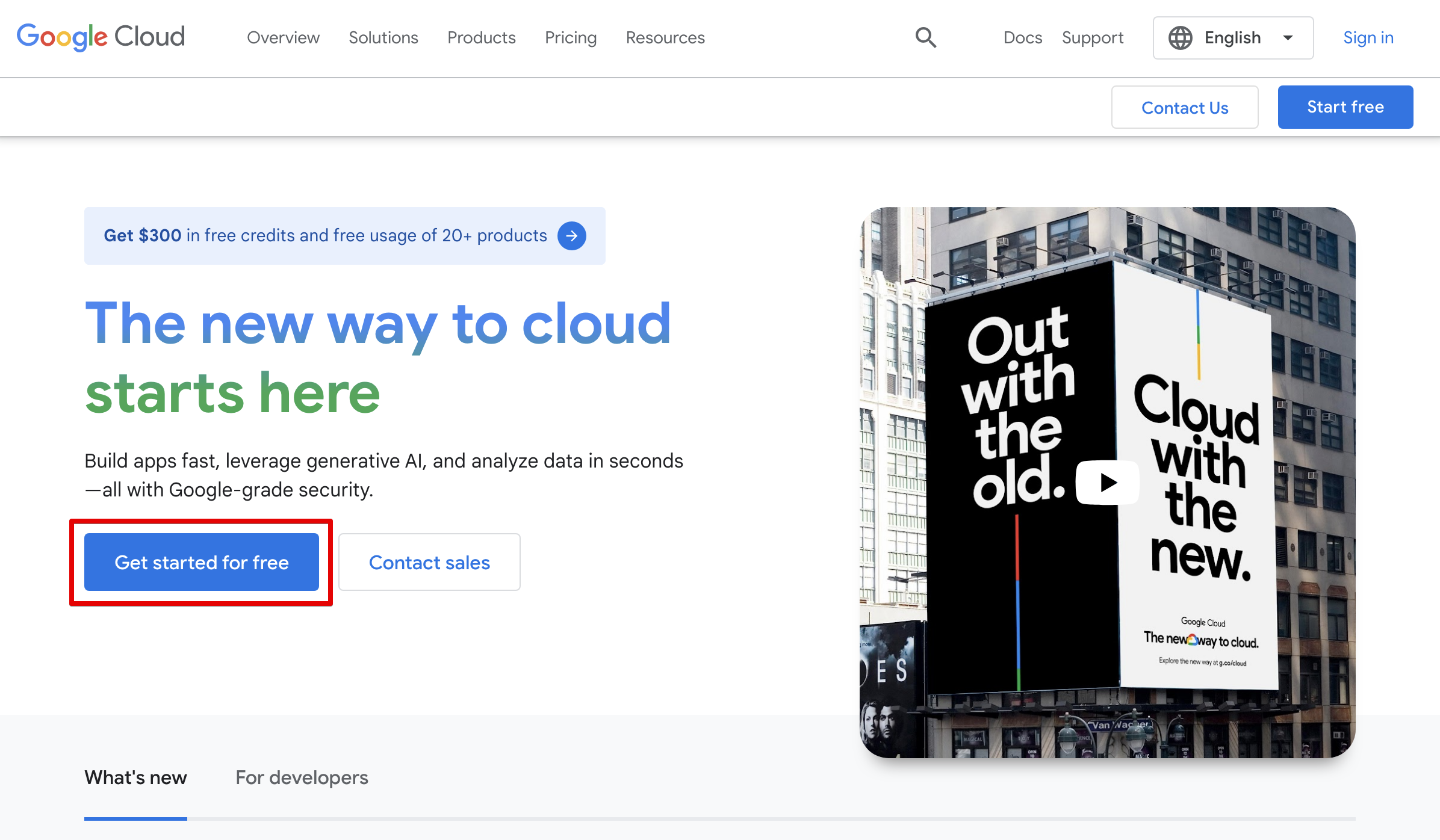
2
Log in to your Google Account
Log in to your Google Account.
3
Complete registration
Fill in the registration form. Provide valid payment details — it’s important, as you need an account with an active payment method to use BigQuery.
1.2 Set up a billing account
To use BigQuery you need an active billing account so that you’ll be able to use Google Cloud Platform resources. Free Tier Google Cloud accounts don’t support some BigQuery services which are required.Upgrading a Free Tier account
Go to the main page of your Google Cloud Platform project and click ACTIVATE FULL ACCOUNT.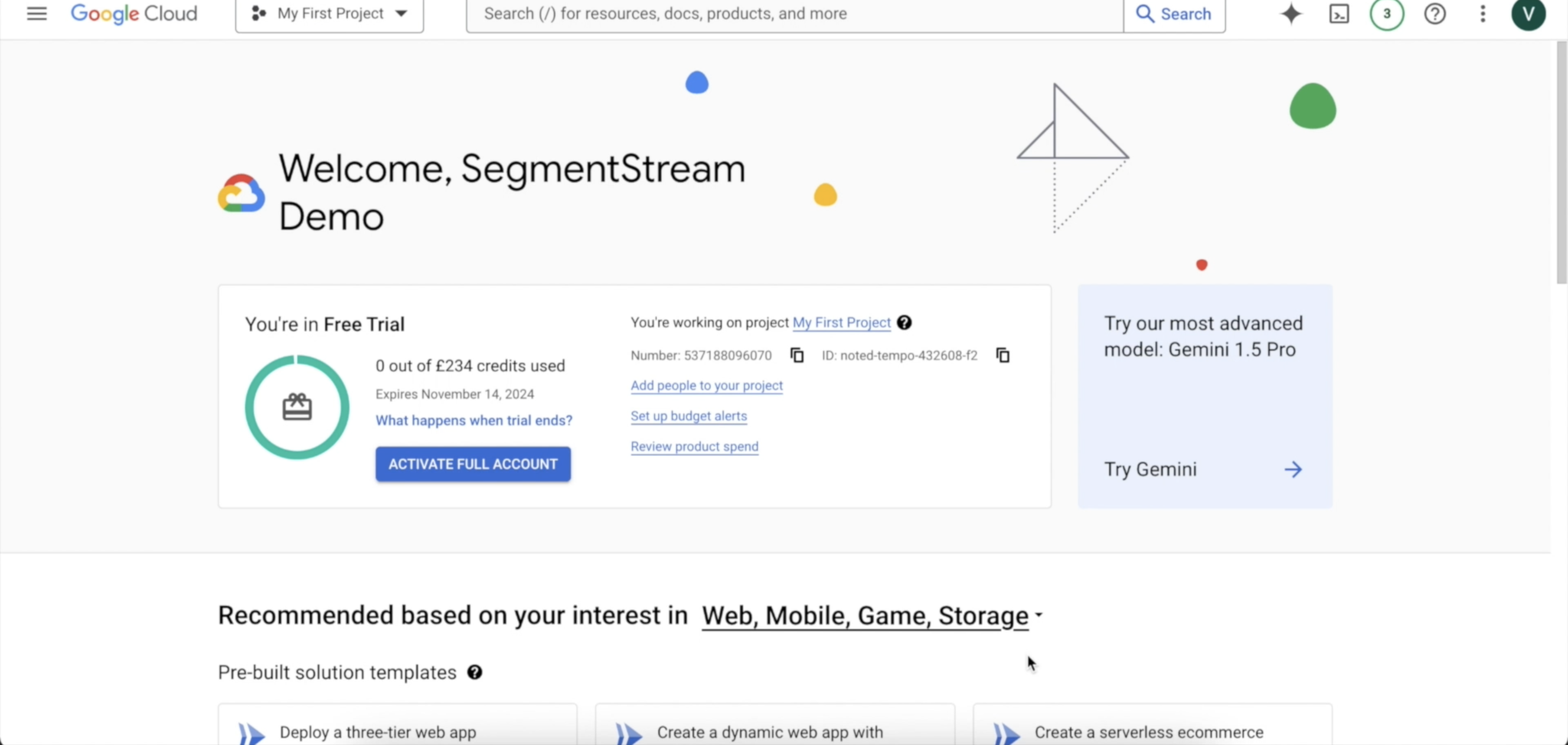
Checking billing account status
If you don’t have an ACTIVATE FULL ACCOUNT button on the main project page, check that you have an active billing account with a valid payment method:1
Go to billing
Go to the Google Cloud Platform Billing page.
2
Check billing accounts
Check that you have at least one billing account with active status.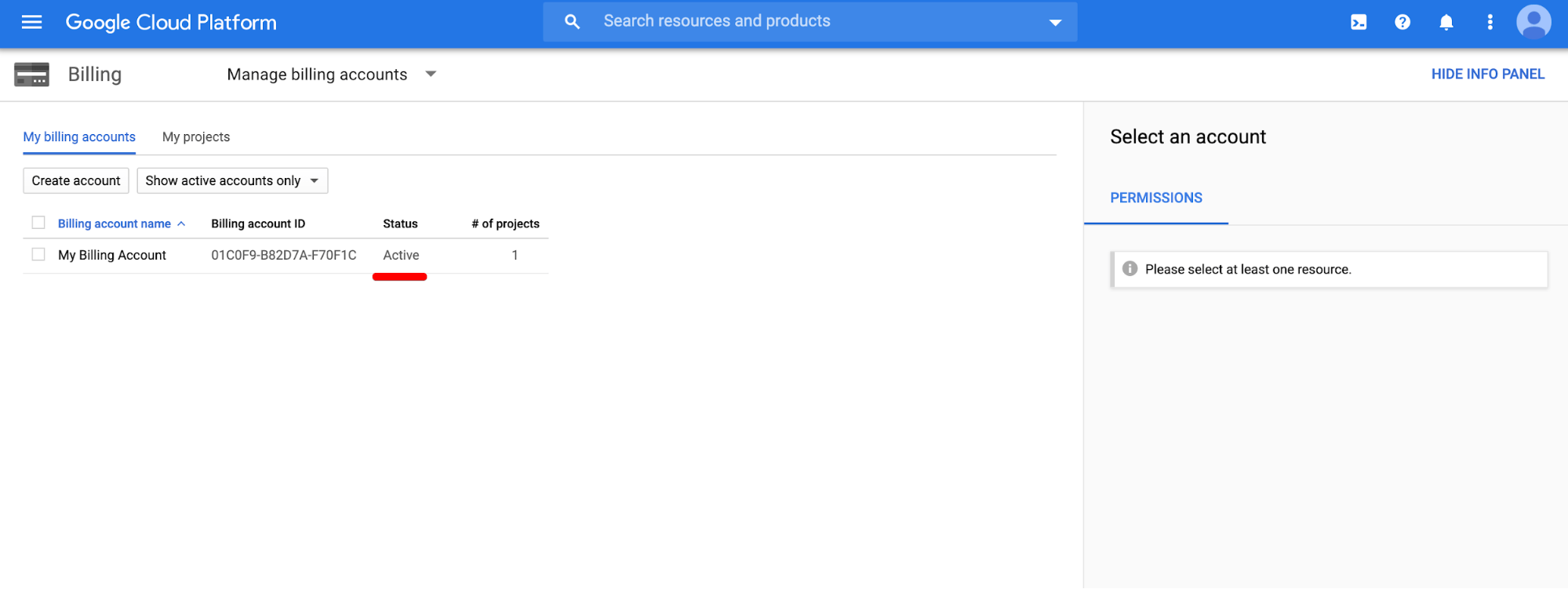
3
Link billing to project
Click on MY PROJECTS, and confirm that the billing account is linked to your project. If it isn’t linked, click the “more icon” then Change billing to link an active billing account.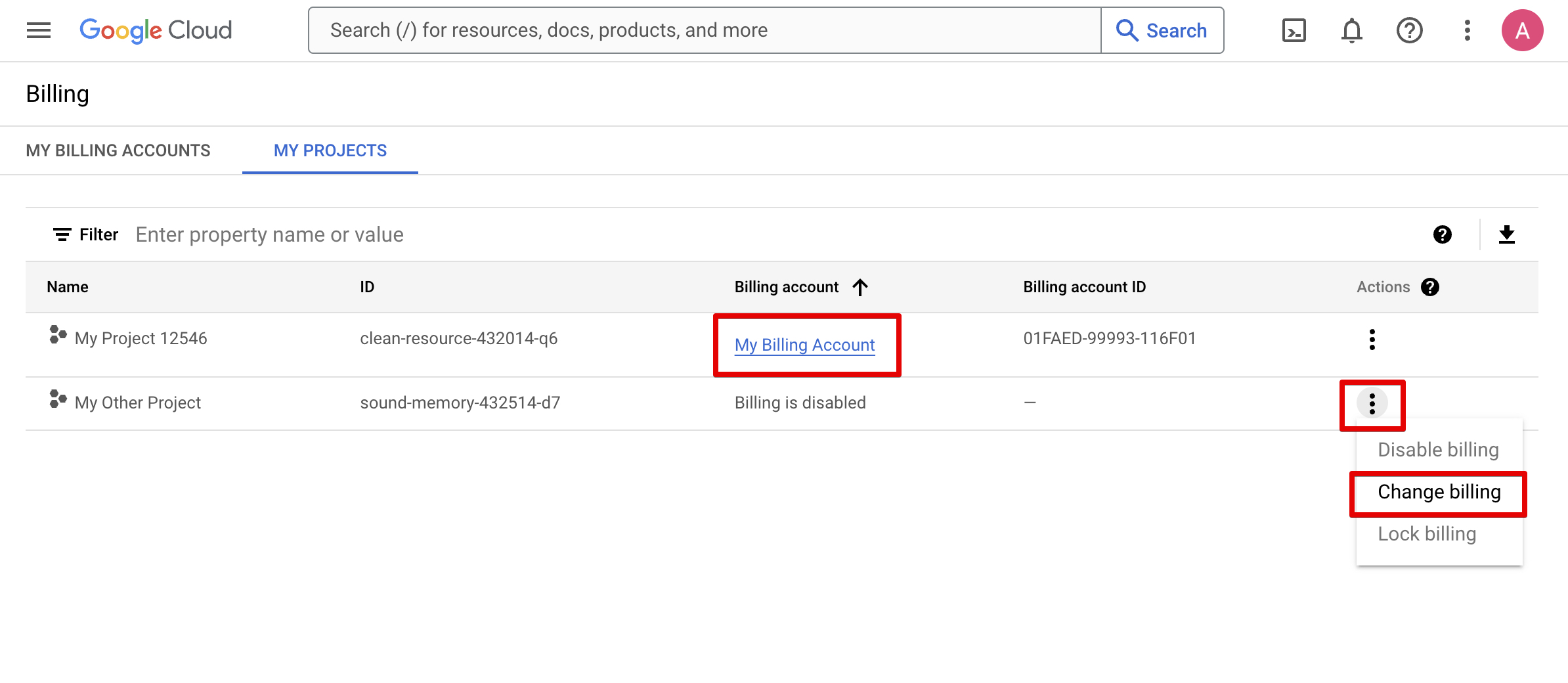
4
Verify account status
Click on the account name and follow instructions to set the status to active if it is different.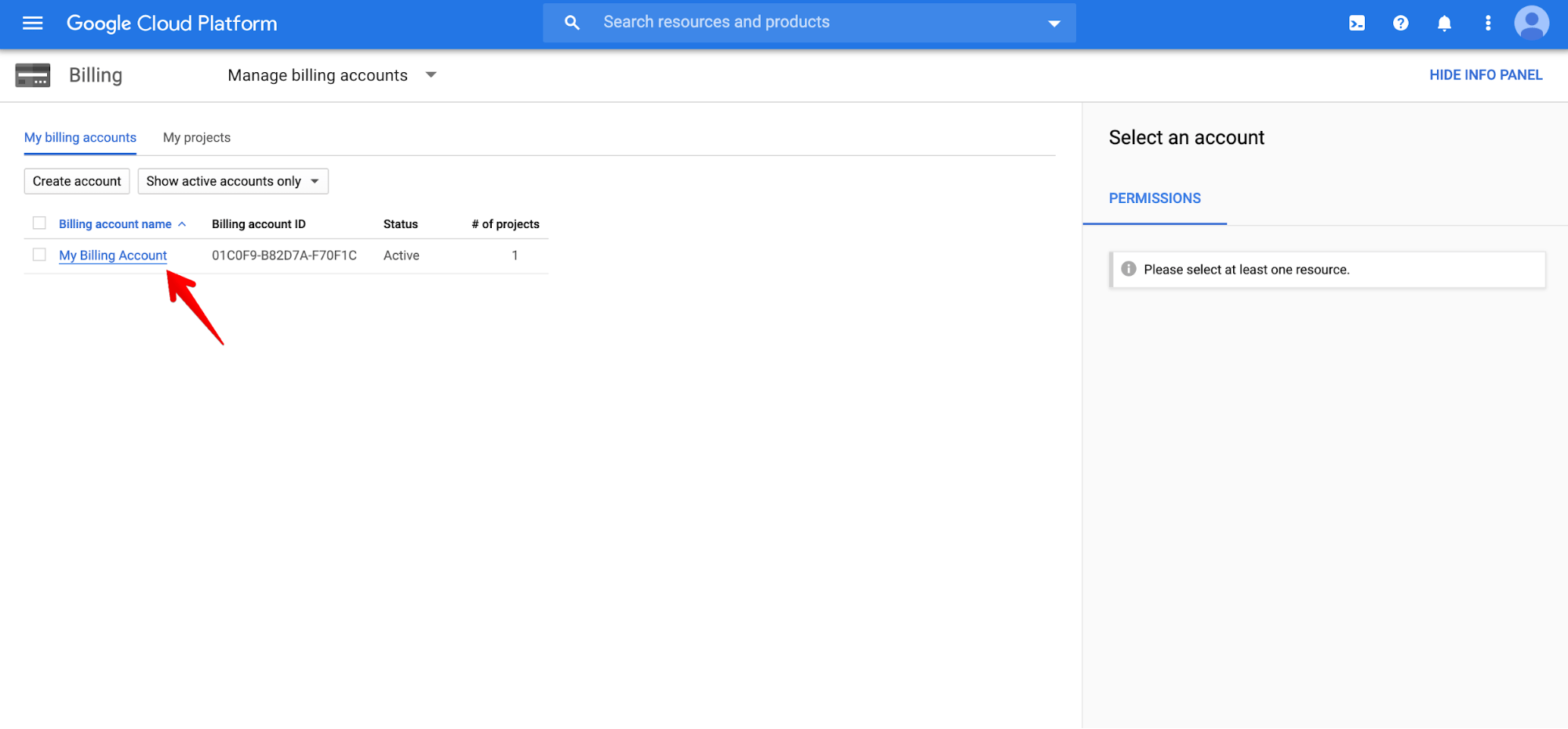
5
Validate payment info
Validate your payment info (1) and check that you don’t have any critical (red) billing health check issues (2).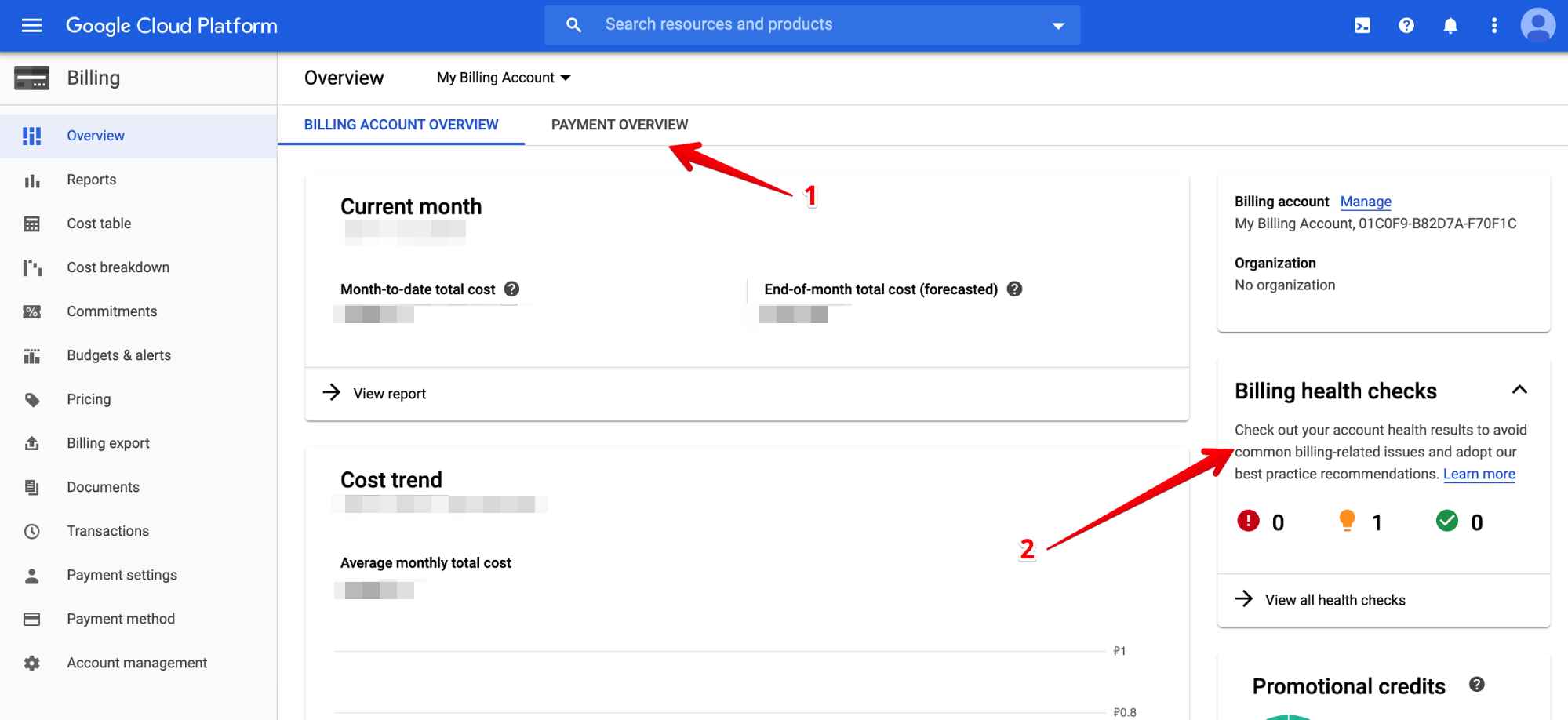
1.3 Create a Google Cloud project
1
Navigate to Manage resources
Navigate to the Manage resources page in the Google Cloud console.
2
Select organisation
On the Select organisation drop-down list at the top of the page, select the organisation resource in which you want to create a project. If you are a free trial user, skip this step, as this list does not appear.
3
Create the project
Click Create Project. In the New Project window that appears, enter a project name and select a billing account as applicable.
4
Set parent organisation
Enter the parent organisation or folder resource in the Location box. That resource will be the hierarchical parent of the new project. If No organisation is an option, you can select it to create your new project as the top level of its own resource hierarchy.
5
Finish creation
When you’re finished entering new project details, click Create.
Step 2. Set up GA4 BigQuery export
Once your Google Cloud project is ready, you need to link your Google Analytics 4 property to BigQuery so that event data is exported automatically.2.1 Link your GA4 property to BigQuery
This process must be completed by a user with Owner access to the Google Cloud project. The Owner role is assigned to the user who created the project, but you can also grant this permission through the Google Cloud Project IAM page.1
Select your GA4 property
Go to Google Analytics 4 and select the property where your data is collected.
2
Open Admin settings
Click on the Admin button.
3
Navigate to BigQuery links
In the Product Links section, click BigQuery links.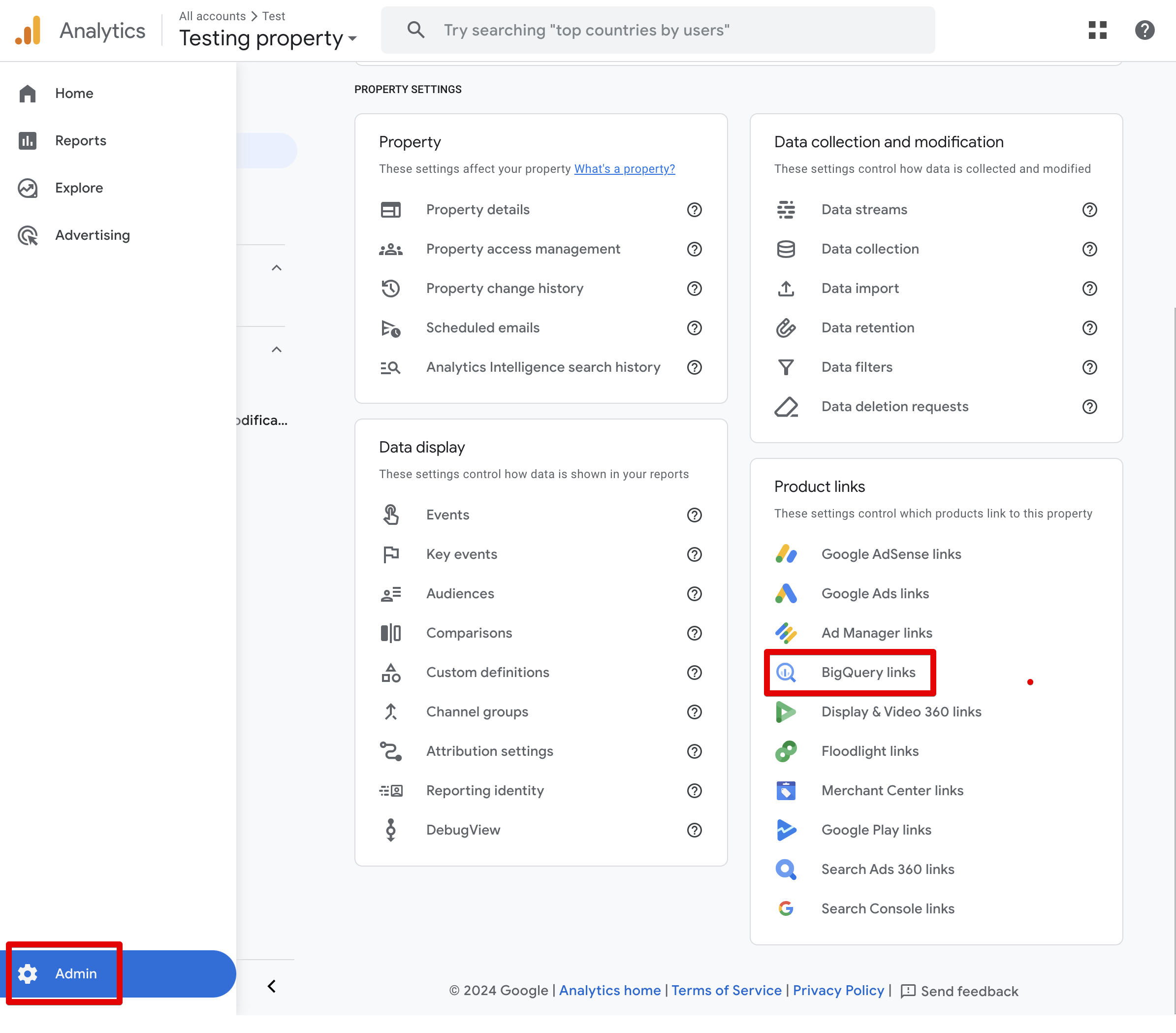
4
Configure the BigQuery link
- Click Link > Choose a BigQuery project.
- Select the BigQuery project you created in Step 1.
- Select the Data location that matches your business’s region.
- Enable both the Daily and Streaming export types.
- Make sure no events are excluded.
-
Click Submit.
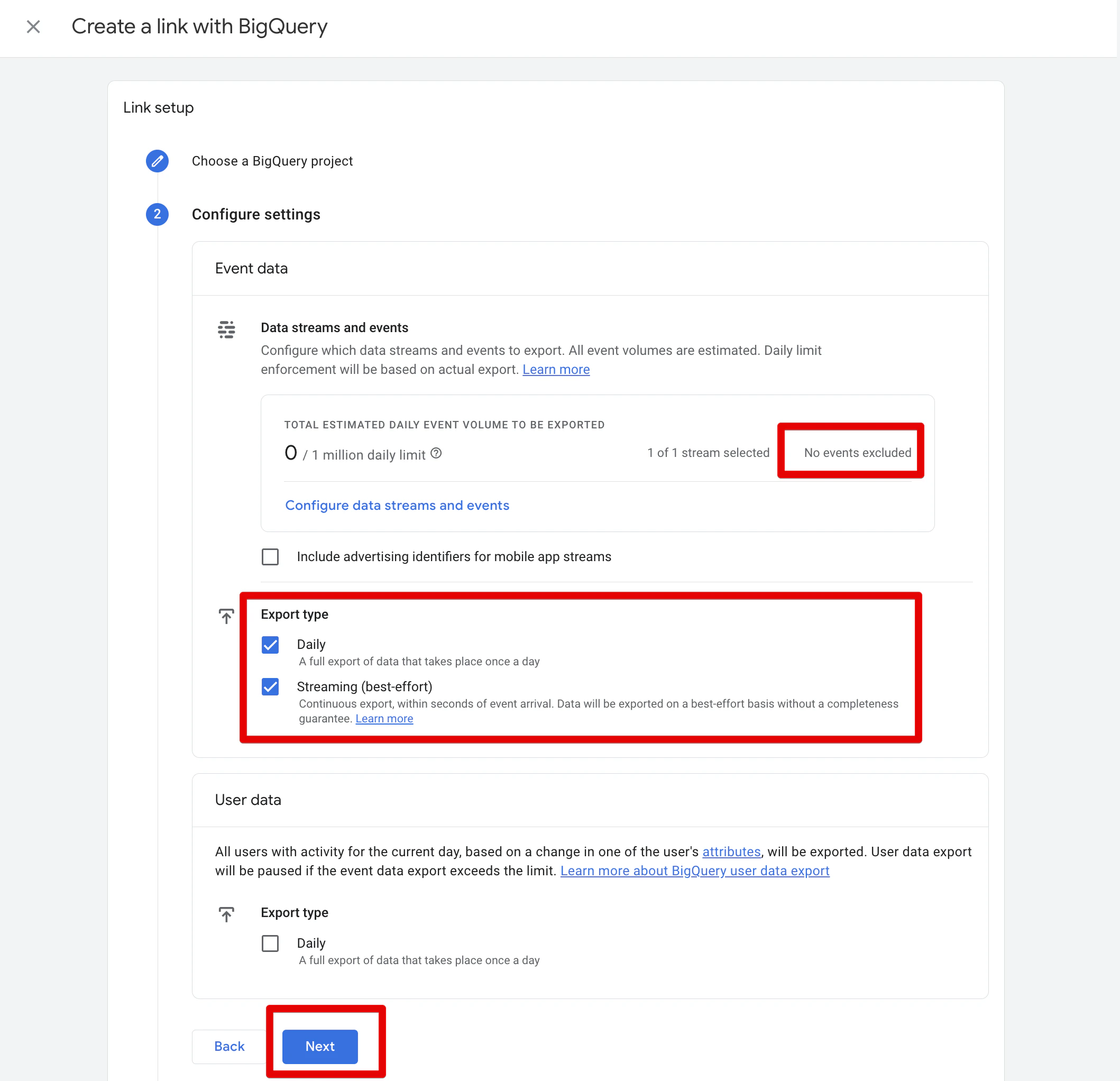
We recommend enabling both the Daily and Streaming (best-effort) export types. The daily export provides a complete dataset once per day, while the streaming export ensures near real-time data availability.